
Refrigerant Leak: What does it mean?
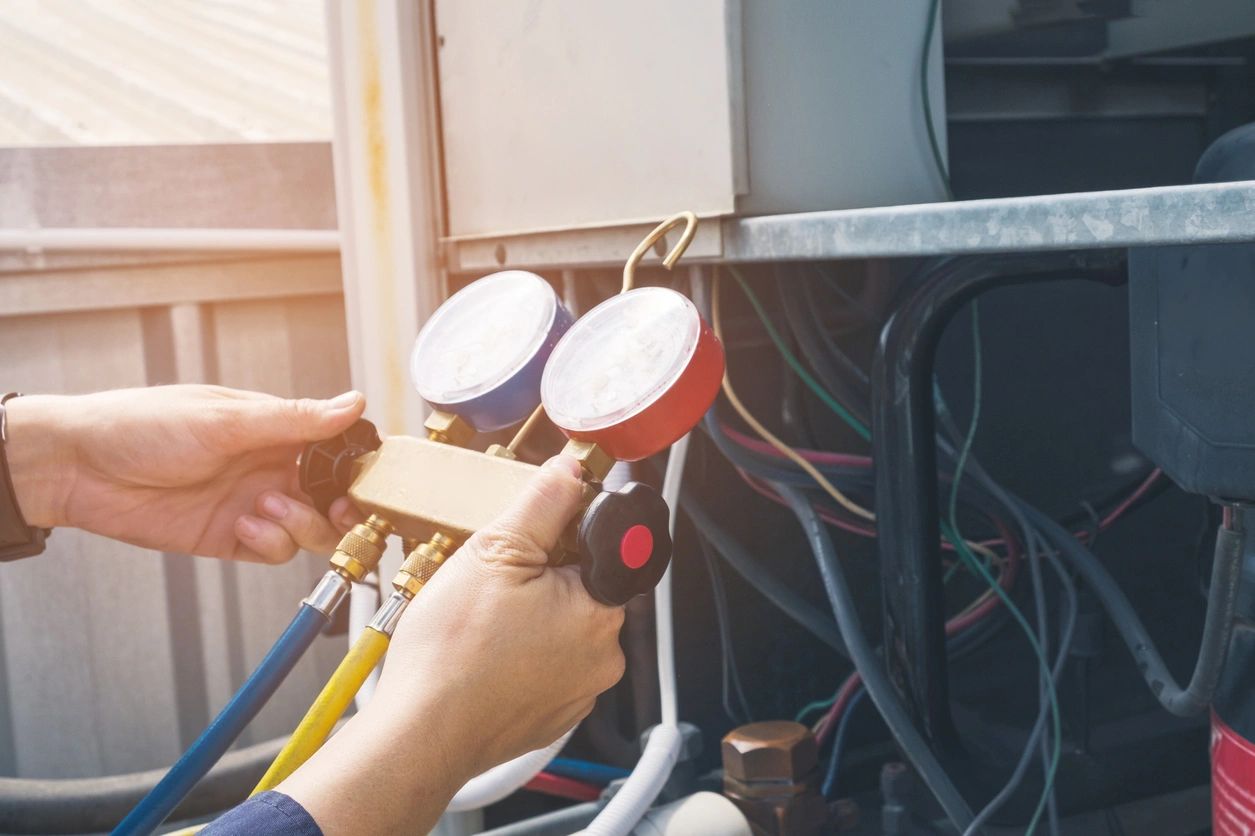
Essentially, a refrigerant leak occurs when the fluid responsible for absorbing and transferring heat escapes from your sealed refrigerant system inside your HVAC unit. Refrigerant is essential to the cooling process—it cycles through the refrigeration circuit inside your HVAC unit, changing between liquid and gas states to remove heat from indoor air and release it outside. When a leak develops, the system can no longer operate efficiently or effectively.
If your HVAC unit is operating to manufacture specifications, your unit should not “loose” refrigerant. Contrary to popular beliefs, refrigerant does not get “used up” like fuel. If the refrigerant levels inside your HVAC system are low, it almost always indicates a leak somewhere in the system, most often located on the coils or at the refrigerant line connections. These leaks can develop due to corrosion, vibration over time, poor installation, or physical damage.
Common signs of a refrigerant leak include reduced cooling performance, longer run times, higher energy bills, and warm air blowing from vents. You might also notice ice forming on the evaporator coil or hear a faint hissing sound near the unit. In some cases, refrigerant leaks can also lead to increased indoor humidity.
Beyond comfort issues, refrigerant leaks can cause serious damage to the HVAC system if left unaddressed. Low refrigerant levels force the system to work harder, which can overheat components like the compressor—one of the most expensive parts to replace. A leak within your HVAC system can also cause non-condensables to enter the refrigeration circuit, leading to restrictions. In addition to causing issues with the unit operation itself, refrigerant can pose environmental and health concerns if released into the air in large amounts.
Fixing a refrigerant leak involves locating the source, repairing or replacing the damaged component, and then recharging the system with the correct amount of refrigerant. Simply adding more refrigerant without addressing the leak is only a temporary and ineffective solution. According to EPA guidelines, any system that looses over 25% of its refrigerant capacity within 1 year cannot be re-charged, meaning if the leak on your system is too large you may be stuck with a non-operating system in the middle of a heat wave.
Scheduling routine preventative maintenance and inspections can help us detect leaks early and keep your HVAC system running efficiently. If you suspect a refrigerant leak, it’s best to have a licensed HVAC technician diagnose and repair the issue to prevent further damage and ensure safe operation.
Want to learn more about preventative HVAC maintenance? Read more here.