
Understanding Hail Damage on HVAC Equipment
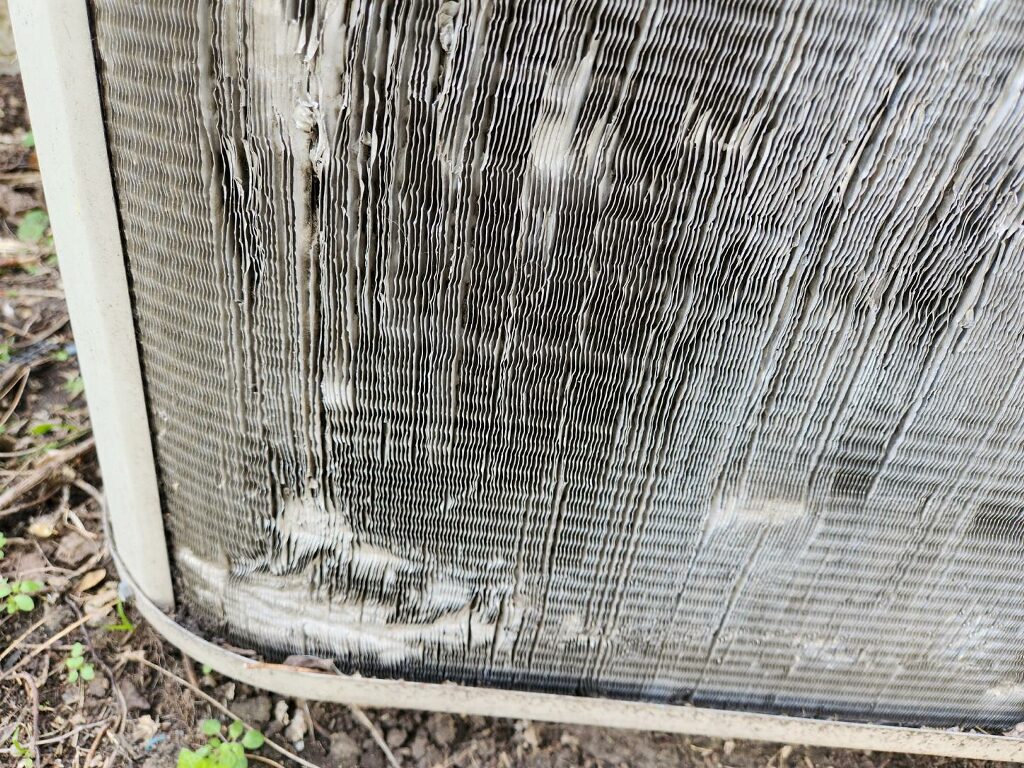
Severe weather can take a toll on your home, and one often-overlooked victim is your HVAC system. Hailstorms, in particular, can cause significant damage to outdoor HVAC units. Hail damage to HVAC units can impact performance, efficiency, and the units lifespan. Knowing what hail damage looks like—and what to do about it—can help you avoid costly repairs and keep your system running smoothly.
How Hail Affects HVAC Systems
Most residential HVAC systems include an outdoor condenser unit, this unit is responsible for releasing heat from your home and relies on delicate components like aluminum fins, condenser coils, and a fan assembly to function properly. During a hailstorm, ice pellets can strike these components with enough force to cause physical damage, just like a car windshield. Common issues hail damage can cause include:
- Condenser coil damage and bent fins: Thin metal fins surround your unit and help dissipate heat during unit operation. When these fins become damaged or bent, your unit can suffer from restricted airflow, leading to reduced unit efficiency and even unit freezing. If your condenser coil is dented or punctured during a hailstorm, you may also develop refrigerant leaks. A refrigerant leak can lead to complete unit failure and may result in costly repairs.
- Fan blade damage: Your condenser fan motor is responsible for drawing air through the condenser coils, removing heat from the refrigerant. Hail can warp or chip the fan blades, leading to imbalance or motor strain. A failed condenser fan motor will leave you without a working unit.
- Cabinet dents: While only cosmetic, severe dents can sometimes indicate deeper internal damage. With HVAC systems costing as much as they do, cosmetic damage can lessen the value of your unit down the line.
Signs Your HVAC Unit May Have Hail Damage
After a storm, it’s a good idea to visually inspect your outdoor unit. Looking for the following signs can help you identify if you have damage present:
- Visible dents or dings on the metal casing
- Flattened or uneven fins
- Unusual noises when the system runs
- Reduced cooling performance or longer run times
- Higher-than-normal energy bills
Hail damage isn’t always immediately obvious, but delaying inspection can lead to part or unit failure over time. Even if your system appears to be working, your system may be suffering from hidden damage. Having your system inspected promptly is the best way to catch issues quickly before they become a problem. A professional HVAC technician can assess the extent of damage, straighten bent fins, test for refrigerant leaks, and recommend further repairs or replacement if needed.
Repair vs. Replacement
Not all hail damage requires a full system replacement. Minor fin damage can often be corrected with specialized tools, and superficial dents may not affect performance. However, if critical components like coils or the compressor are compromised, replacement might be the more cost-effective long-term solution.
With the new 2025 EPA guidelines now in full effect, replacement and repair parts for R-410A systems are becoming harder to obtain. If your system is older (10–15 years), it may no longer be economical to try and repair your system.
Insurance Considerations
In many cases, homeowners insurance policies cover hail damage to HVAC equipment. Knowing what your homeowners insurance policy covers and doesn’t cover is important. If your homeowners insurance policy does cover hail damage to HVAC equipment, it’s important to promptly document damage to your unit with photos, schedule a professional inspection, and contact your insurance provider immediately. Insurers may require proof that the damage to your unit directly impacts the systems performance, not just cosmetic appearance. If this is the case for your homeowners insurance policy, scheduling an inspection with a licensed and trained HVAC technician is the best option.
Preventing Future Damage
While you can’t stop a hailstorm, there are several ways you can reduce the risk of damage. Some ways to reduce your risk of damage may include:
- Hail guard installation: Hail guards are protective coverings or cages designed for HVAC units that help shield against impact.
- Adding fencing or barriers: This would include strategically placing barriers that can deflect hail without blocking airflow. If this is an option you would like to look into, it is strongly recommended that you consult with a HVAC professional to ensure you are not blocking or reducing airflow during installation.
- Scheduling regular maintenance: Keeping your system in good condition helps it better withstand external stress. Routine preventative maintenance is the best way to monitor your systems condition and best way to ensure your system is always running at peak performance. Read more about the importance of Preventative HVAC Maintenance here.
Hail damage to HVAC equipment is more than just a cosmetic issue—it can compromise your system’s efficiency and reliability. After any major storm, taking a few minutes to inspect your unit and scheduling a professional evaluation if needed can save you from bigger headaches down the road.
Staying proactive ensures your HVAC system continues to keep your home comfortable, no matter what our wild Midwest weather brings.